
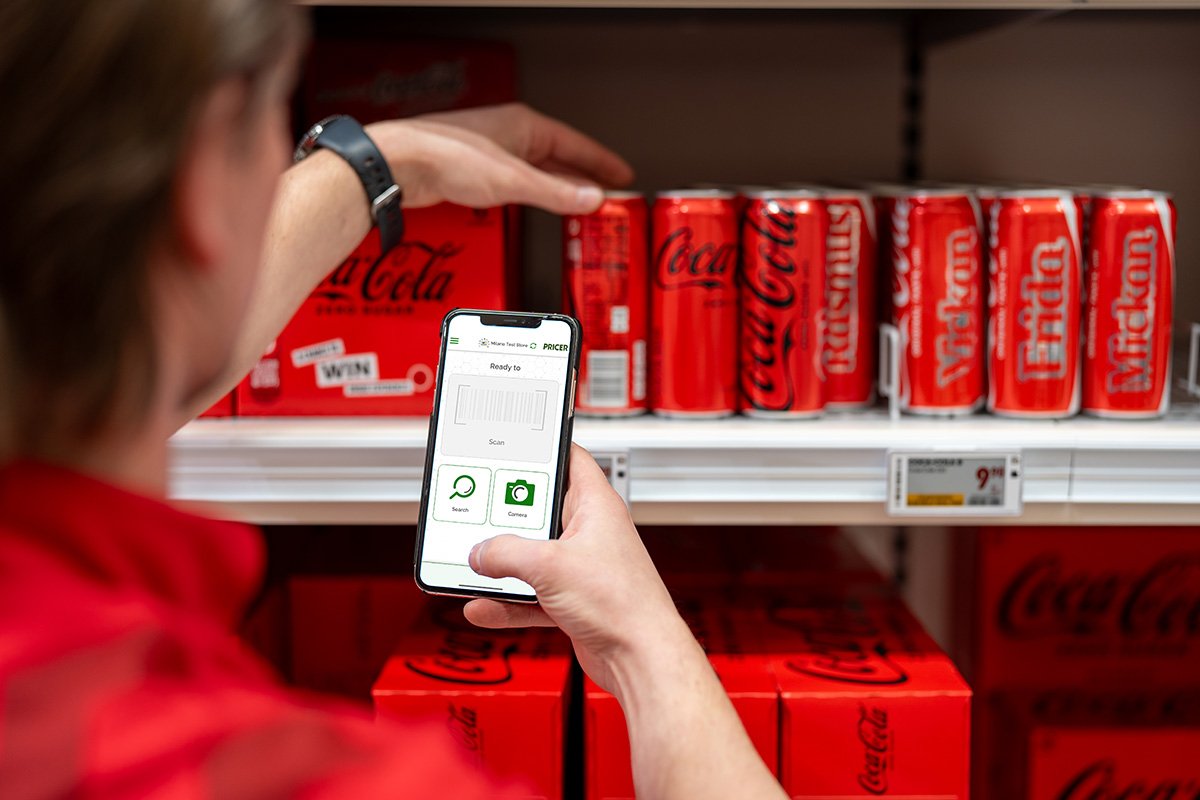
Every price change your team enters manually is a gap between what’s in your system and what’s on your shelf. Multiply that across thousands of SKUs and weekly promotion cycles, and the cost shows up fast: labor hours, pricing errors, and promotions that launch late.
The benefits of electronic shelf labels aren’t theoretical. They’re the direct result of eliminating the manual pricing loop, so your shelf always matches your POS, your team focuses on customers instead of tags, and your pricing operation scales without adding headcount.
What Changes After Switching From Paper Tags
Paper labels turn every price change into a logistics project. ESLs turn it into a system update. Decisions that used to require staff coordination and physical intervention become automated, centrally controlled, and auditable.
Here’s what that shift looks like in practice:
| Capability | ESL System | Paper Labels |
|---|---|---|
| Price update speed | Seconds, store-wide | Hours - tag by tag |
| Shelf-to-POS accuracy | Always synchronized | Prone to human error |
| Promotion execution | Instant, on schedule | Manual, often delayed |
| Labor requirement | Minimal after go-live | Recurring weekly effort |
| Markdown & clearance execution | Real-time, controlled rollout | Store-by-store, error-prone |
| Multi-store consistency | Centralized control | Store-level process |
| Audit readiness | System log of every change | Paper trail gaps |
| Inventory accuracy support | Shelf data is always current | Manual recount required |
The operational change is immediate. The strategic value – pricing consistency across locations, faster competitive response, and a leaner labor model – compounds over time.
Pricing Accuracy: Fewer Shelf-to-Checkout Mismatches
The shelf price is a promise. When it doesn’t match the POS, someone pays for the difference, and it’s rarely the customer.
ESLs eliminate the root cause. When a price updates in your system, every affected label refreshes automatically: the same change, across every shelf, within seconds. No lag, no manual verification, no cashier overrides.
- Shelf prices always stay synchronized with your POS, so what the customer sees is what they pay
- Unit pricing and compliance fields update automatically, so you’re always displaying what regulations require
- Every price change is logged, giving your team a clean audit trail without manual record-keeping
For large-scale retailers, that level of accuracy isn’t achievable with paper. It requires automation.
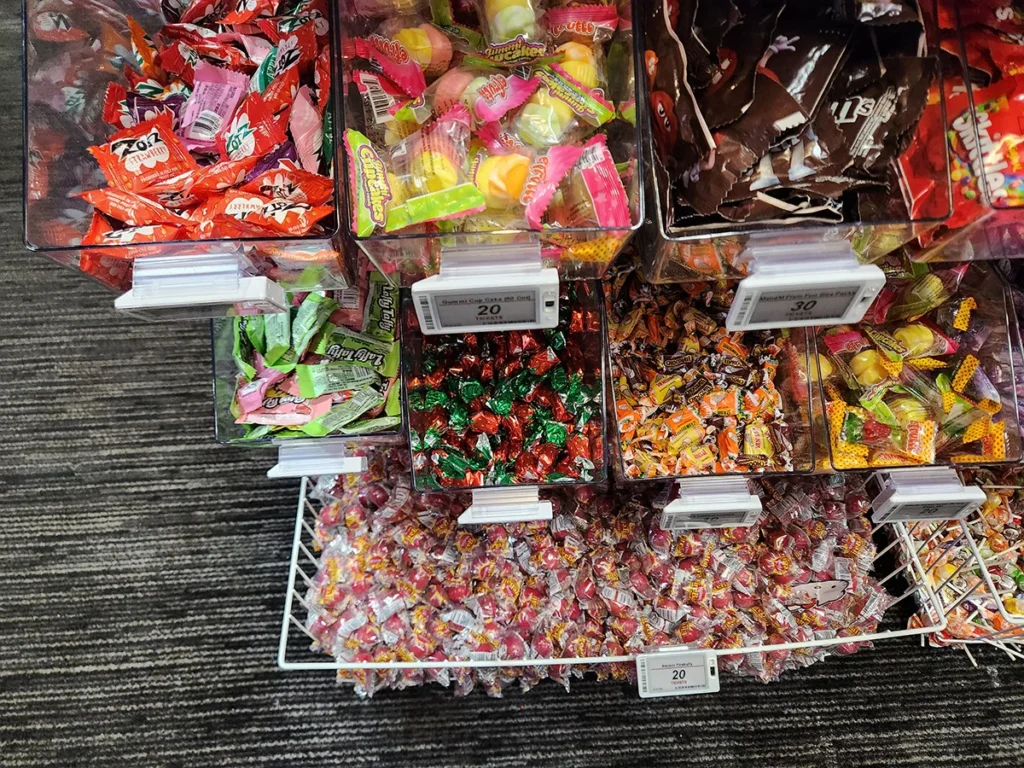
Inventory Accuracy: Why Digital Price Tag Systems Help
ESLs put shelf-edge data to work.
Two capabilities make this possible:
Back Pages: Staff-Facing Information at the Shelf
Every MarginMate label features multiple display pages. The customer-facing page shows price and product information. Back pages – accessible via the handheld IR Key – display operational data your team needs at the shelf, including stock quantity on hand and replenishment flags, so you can:
- Reduce out-of-stock incidents before they cost you a sale
- Shorten the time between a low-stock trigger and a replenishment action
- Eliminate the manual inventory check that eats floor associate time during peak hours
SmartFLASH: Put-to-Light Replenishment and Click-and-Collect
Every label is SmartFLASH enabled. A flashing LED can be activated from the system in under one second on any label, in any department, across the entire store.
For put-to-light replenishment, SmartFLASH shows staff exactly which shelf location needs restocking without a printed pick list or verbal instruction. For click-and-collect, it guides the pick associate directly to the right location – faster picks, fewer errors, no additional hardware beyond the labels already installed.
The coordination between your floor team and back-of-house that used to require a phone call now happens through the shelf itself.
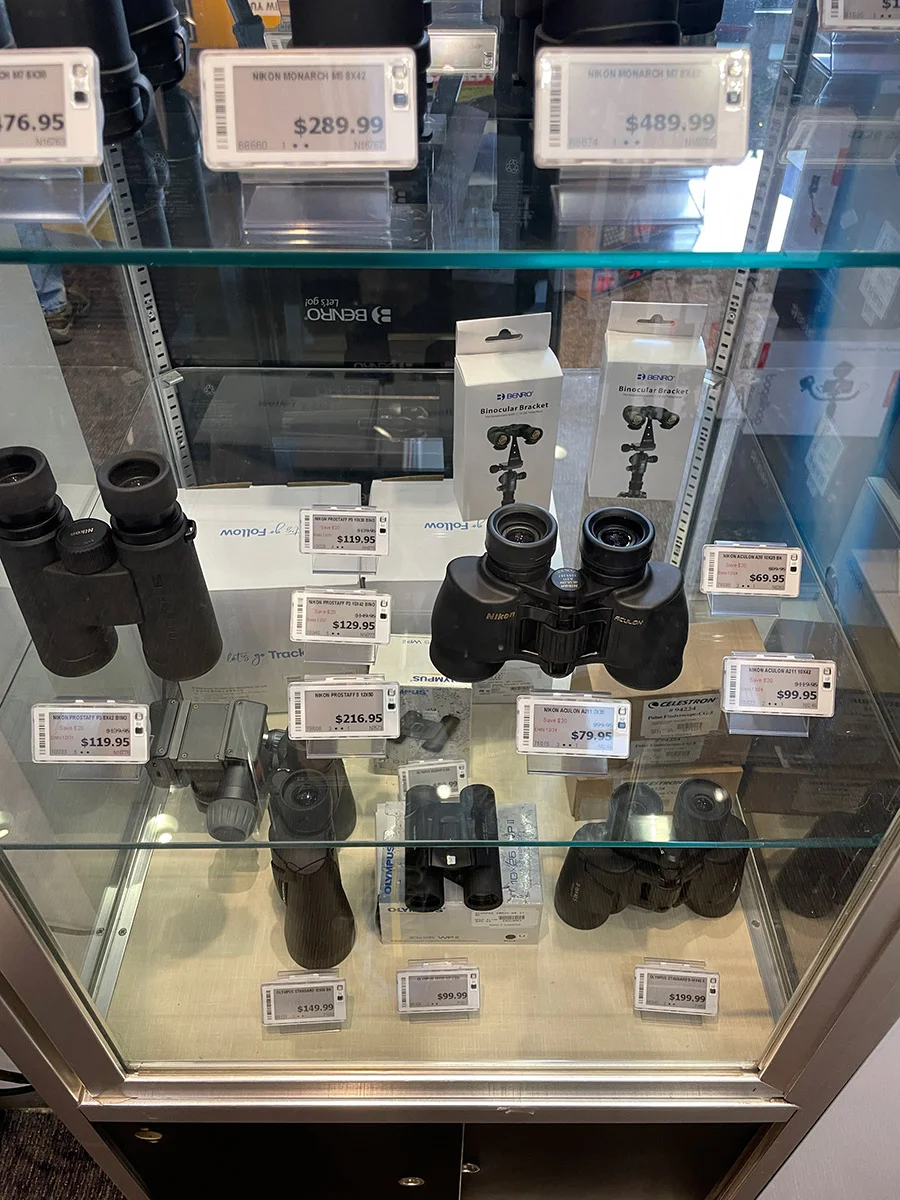
Promotion Execution: Faster Updates, Fewer Missed Promos
Every day a promotion launches late is a margin you don’t recover. When pricing is tied to a physical label, your execution speed is limited by how fast your team can print, distribute, and swap tags. It’s rarely fast enough.
With ESLs, promotions go live when you schedule them: no store-level coordination, no partial rollout where some aisles are current, and others aren’t. A price change in your POS updates every relevant label in seconds.
For retailers responding to competitor pricing moves, supplier cost changes, or end-of-day markdown decisions:
- Launch time-sensitive promotions the moment they’re approved, not hours later
- Schedule future promotions in advance and let the system execute them on time
- End a promotion cleanly – every label reverts simultaneously, no stale promo tags left on the shelf
- Push the same promotion to all locations at once, so no store is ahead or behind
Chain Economics: Cost-Effective ESL Tags at Scale
The business case strengthens as your store count grows. Manual price change labor is a per-store, recurring cost – it scales with every location you add. ESL costs don’t.
Once deployed, pushing a price change to one store or one hundred takes the same effort from your pricing team: practically none.
Where the savings accumulate:
- Labor hours on tag printing, distribution, and replacement across every location
- Pricing error resolution costs, as shelf-to-POS accuracy improves
- Promotion execution costs – coordinating a chain-wide promo no longer scales with headcount
- Paper, printing materials, and label supply
- Micro-price adjustments – a 2-cent change to hit a margin sweet spot – become viable when the labor cost of making it is effectively zero
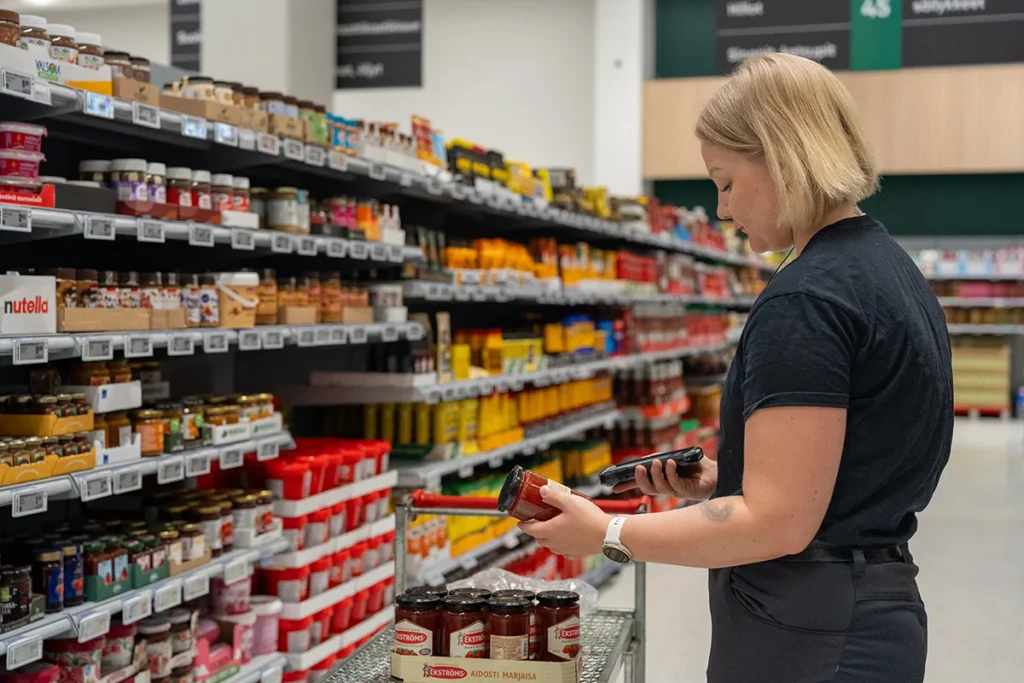
The TCO Argument: What RF-Based Systems Cost You Over Time

Building the business case for ESLs doesn’t have to start with your spreadsheet.
Labor rates, pricing error costs, and tag-change time are often spread across different systems. We help bring that data together and build the financial case with you.
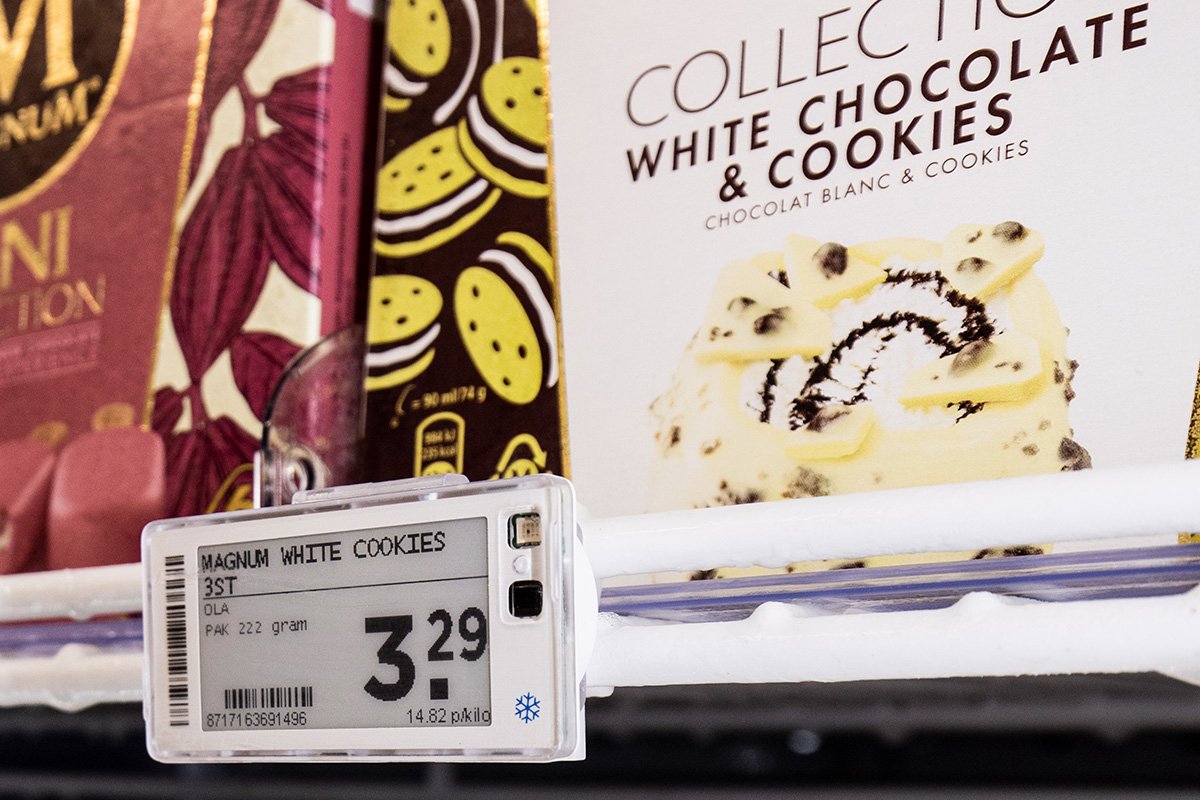
We focus on the total cost of ownership, not just ROI.
TCO gives a clearer picture of what an electronic shelf labeling system actually costs and delivers over time.
- We help quantify labor savings, pricing accuracy, and ongoing operating costs
- We evaluate long-term infrastructure costs, not just upfront hardware spending
- We compare technologies based on real-world performance, not just spec sheets
We build a business case grounded in your store environment and operating model
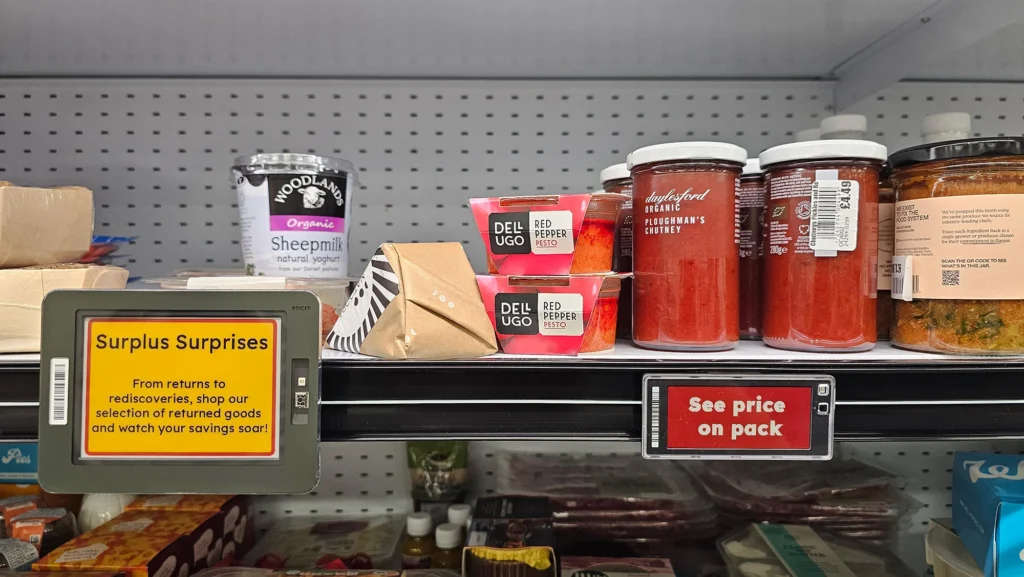
The technology behind the labels matters.
Many RF-based systems, including Bluetooth and Wi-Fi, share spectrum with other in-store devices. That can increase battery drain and lead to more frequent replacement cycles.
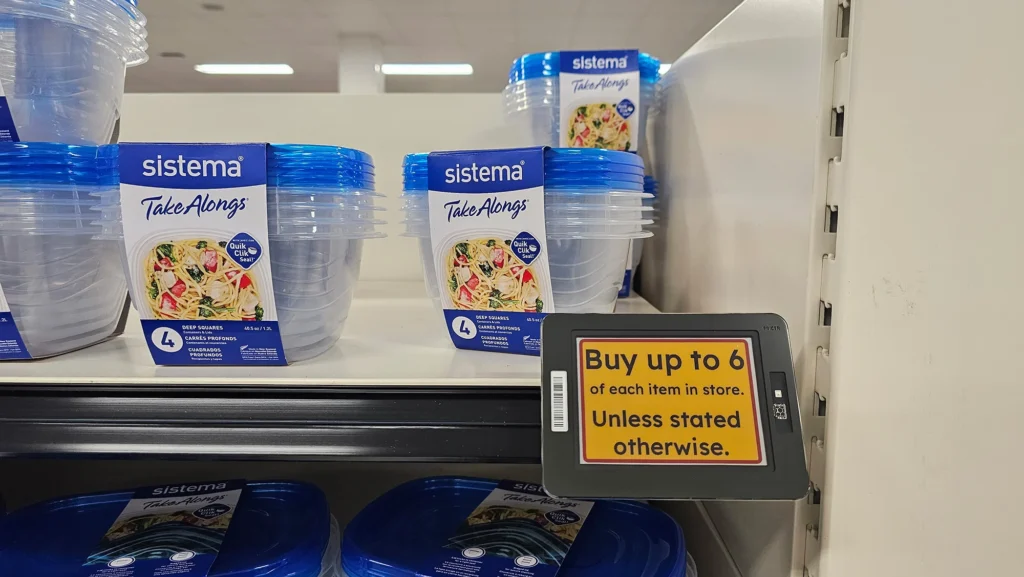
MarginMate uses infrared light instead of RF.
Its light-based communication is fast, reliable, and energy-efficient, helping extend battery life and maintain more predictable long-term costs.

The TCO picture over a 10-year horizon
- No RF bandwidth competition – runs entirely outside your store’s wireless environment, so your IT team isn’t managing spectrum allocation for labels
- Predictable infrastructure costs – stable pricing years into deployment, no escalation as the system matures
- Fixed-fee annual help desk – template changes, retraining, and monitoring under one annual fee, no à la carte charges when something needs attention
- Proactive monitoring – issues identified and resolved before your team knows they exist
- Installation cost control – cabling done by your existing low-voltage contractors, keeping that labor outside our margin structure
The question on a 10-year horizon isn’t what this costs to buy. It’s what it costs to own, maintain, and never have to replace ahead of schedule. We can help you work through that picture, and if the numbers don’t make sense for your operation, we’ll tell you that too.
KPIs to Track After Rollout
The operational improvements from an ESL deployment are measurable from day one. These are the metrics pricing, operations, and IT teams typically track to confirm the system is delivering against its goals – and to build the internal reporting narrative that supports further rollout investment.
| KPI | What to Measure | Cadence |
|---|---|---|
| Pricing accuracy | % of shelf prices matching POS | Spot-check, weekly |
| Label change speed | Time from approval to shelf update | Per pricing cycle |
| Promotion compliance | % of promos active on schedule | Each promo event |
| Labor hours on pricing | Staff hours per week spent on tags | Monthly trend |
| Inventory discrepancy rate | Shelf count vs system count variance | Post-cycle audit |
| Click-and-collect pick speed | Time from order to pick confirmation | Ongoing (if applicable) |
Most retailers establish a baseline on these metrics before go-live, so the improvement is clearly attributable. The MarginMate team can help you define the right tracking approach for your environment.
What Do Our Customers Think?
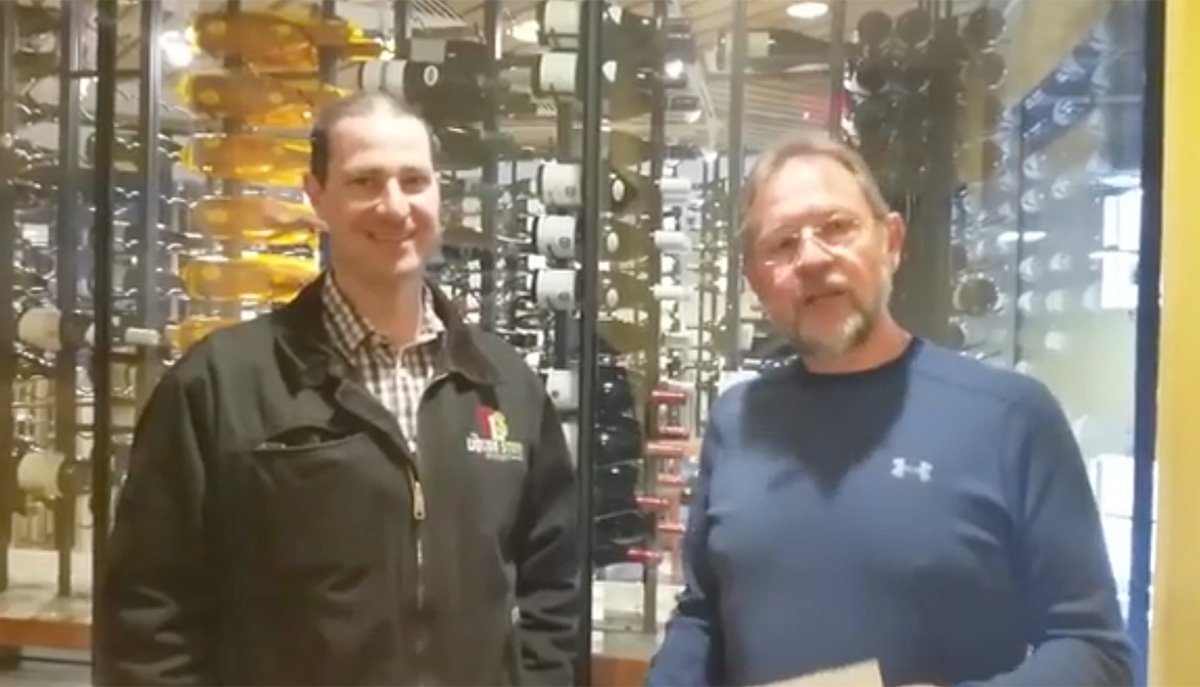
Retailers across grocery, liquor, furniture, and specialty retail choose MarginMate for its reliability, performance, and ability to deliver accurate pricing in complex, high-SKU environments. Watch real customers share their experience with our digital price tags for retail.

Frequently Asked Questions
What are the biggest benefits of electronic shelf labels?
More accurate shelf pricing, faster promotion execution, and less labor spent printing and replacing tags. Beyond those immediate gains, ESLs give retailers centralized pricing control across all locations, a clean audit trail for every price change, and shelf-guided tools that support inventory and fulfillment workflows – benefits that compound as your store count grows.
Do digital price tags help with inventory accuracy?
Yes, directly. Staff-facing back pages display stock quantity on hand at the shelf edge, reducing the need for manual inventory checks. SmartFLASH LED guidance supports put-to-light replenishment workflows and click-and-collect picking, helping teams respond faster to low-stock conditions and fulfillment requests without additional hardware.
Are ESLs cost-effective for retail chains?
For chains with frequent price changes and multiple locations, yes. The labor savings from eliminating manual tag changes accumulate across every store, every week. Pricing error resolution costs also drop as shelf-to-POS accuracy improves. The ROI case strengthens with scale – the more stores you operate, the more the per-location cost of pricing operations decreases.